
New
Welcome offer
100% up to 1 BTC
10% weekly cashback, no wager
- Min deposit
- €10
- Withdrawal
- Instant–5 min

 +2
+2
40x deposit in 7 days, max €50 bet counted, slots 100% / live 20%

A slot by Hacksaw Gaming
Desert Temple represents another installment in the perpetually expanding catalog of games drawing inspiration from ancient Egyptian civilization and its enduring cultural mystique. Backseat Gaming, operating within the broader Hacksaw Gaming umbrella, has fashioned…
 Studio
Hacksaw Gaming
405 games on Velatonmies
Studio
Hacksaw Gaming
405 games on Velatonmies
Hacksaw Gaming is an online slot game studio established in 2018. The company develops slot games, scratchcards, and fixed odds games, often with a mobile-first approach. It holds licenses from multiple jurisdictions, including the Malta Gaming Authority and the UK Gambling Commission, and its portfolio includes titles such as Wanted Dead or a Wild.
+20points once publishedApproved submissions only. A rejected one earns nothing.
+2+1

 +1
+1Restrained on the surface, quietly sophisticated underneath — but the ceiling is bonus-only.
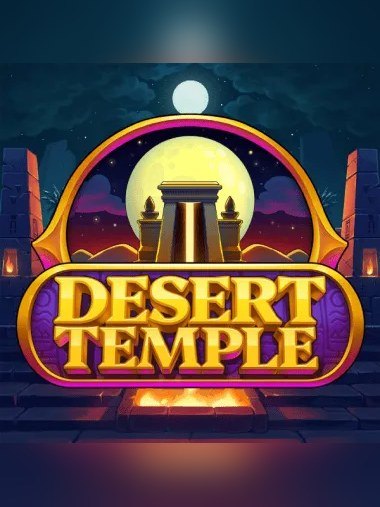
Desert Temple represents another installment in the perpetually expanding catalog of games drawing inspiration from ancient Egyptian civilization and its enduring cultural mystique. Backseat Gaming, operating within the broader Hacksaw Gaming umbrella, has fashioned this outing around cluster-based paylines paired with a symbol multiplier advancement system as its mechanical foundation. The recurring attraction to Egyptian themes demonstrates persistent market appeal despite increasingly crowded marketplace conditions. Developers repeatedly find themselves unable to resist constructing another game populated with pyramids, temples, and desert landscapes. The visual presentation reads competent yet unremarkable: a sphinx-inspired monument, ancient ruins, scattered vegetation, and pyramid forms distributed across the play space. The aesthetic feels pragmatic rather than immersive, suggesting resource allocation prioritized mechanical depth over artistic storytelling quality. Placed alongside alternatives within its thematic category—particularly Backseat Gaming's earlier release The Cursed King—the visual execution reads as professional but creatively restrained and conventional.
The mechanics function across a seven-by-seven grid architecture with winning combinations activated through cluster adjacency patterns. Success requires five or more identical symbols occupying connected positions. Wager denominations range from ten cents to one hundred units per spin, accommodating various player spending comfort zones and preferences. Standard symbols include playing card ranks from ten through ace as low-value pays, accompanied by thematically congruent high-value symbols: an Ankh, Eye of Horus, scarab beetle, and pharaoh mask representing escalating payout tiers. When clusters form winning combinations, a cascade sequence initiates automatically: winning symbols vanish from the grid while replacement symbols descend from above, creating opportunity for additional winning patterns to emerge during the same spin cycle. The cascade mechanism operates independently from traditional wild symbols, which the game intentionally excludes entirely from its symbol composition.
Clusters of exactly five matching symbols return 0.2 to 0.6 times the stake wagered. Clusters exceeding thirty symbols pay between six and twenty-five times the wager amount. Volatility reaches 4 on a 5-point scale, categorizing the experience as medium-high with corresponding win distribution patterns. The return to player percentage achieves 96.24 percent when operating at standard stakes and default play conditions, though alternative RTP variants exist for different jurisdictional requirements and bonus purchase mechanisms influence the realized percentage. Hit frequency settles at 48.87 percent across extended play sessions, indicating reasonable winning frequency despite the medium-high volatility rating. The maximum win reaches 15,000 times the stake, though this theoretical ceiling operates exclusively within bonus rounds and never appears during base game play. This represents atypical design for Hacksaw Gaming, where win accessibility across all game phases typically constitutes standard operating procedure across their portfolio.
The signature mechanical feature involves symbol multipliers activated after cluster completion. Multipliers begin at four times and automatically double following each consecutive cluster match of the same symbol type within cascade sequences, reaching a maximum of 1,024 times the base value. Mystery symbol clusters containing five or more symbols transform uniformly into a single symbol type and automatically inherit any existing multiplier value. Two distinct bonus modes provide contrasting strategic pathways. Temple of Temptation activates on four scatter symbols, awarding ten free spins with all multipliers retained throughout; landing three additional scatters grant ten supplementary bonus spins. Fortune of Pharaohs triggers on five scatters, providing ten free spins where every symbol begins with a four-times multiplier already active; hitting three more scatters awards ten additional spins. Both modes preserve all accumulated multipliers throughout feature completion. Players seeking accelerated bonus access can purchase direct entry through specialized mechanisms: BonusHunt FeatureSpins costs double the stake with tripled bonus trigger probability; Sphinx Mystery FeatureSpins costs sixty times the stake guaranteeing five to fifteen mystery symbols bearing multipliers from two to 256 times; direct bonus purchase options cost 100 times the stake for Temple of Temptation or 500 times for Fortune of Pharaohs.
Multiplier functionality requires proper understanding for accurate payout calculation and win potential assessment. When a symbol type receives a multiplier value, that multiplier applies singularly to the complete cluster payout calculation rather than distributing multiplicatively across individual symbols within the cluster. A five-symbol pharaoh mask cluster carrying a four-times multiplier equals 0.6 times the stake multiplied once by four, not through sequential multiplications. This unified application approach may initially disappoint players familiar with alternative multiplicative stacking systems, though the consistent doubling progression of multipliers across consecutive clusters within cascade sequences substantially compensates for this constraint. Base symbol payout values appear deliberately depressed as intentional counterbalance to the multiplier system's considerable multiplicative potential and game volatility. Winning clusters exceeding thirty symbols without active multipliers deliver relatively modest payouts when compared versus comparable cluster-pays implementations from competing studios, yet the systematic multiplier doubling mechanism effectively rebalances the overall win curve.
Desert Temple exemplifies the distilled design methodology Backseat Gaming has methodically perfected through successive releases over recent years. The feature collection maintains mechanical directness and simplicity while simultaneously preserving substantive player engagement and meaningful gameplay depth. Initial visual assessment may communicate design restraint and conventionality, yet interactive engagement with actual gameplay mechanics reveals meaningful operational sophistication and genuine profitability potential. The exclusion of base game access to maximum wins represents atypical deviation from Hacksaw Gaming's established standards, though this particular limitation does not fundamentally compromise the overall mechanical integrity of the experience. The multiplier dynamics available throughout both base game and bonus phases generate abundant pathways to achieve substantial payout sequences. Desert Temple consolidates Backseat Gaming's reputation as a reliable producer of elegantly engineered gaming experiences combining mechanical depth with accessible feature functionality.
Welcome to Velatonmies
Sign in with an account you already have. Post big wins, write reviews, earn points, redeem rewards.
18+ only. By joining you confirm you are of legal gambling age where you live and accept the site terms.